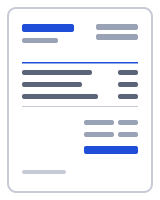
How to make a invoice in one minute
- Choose Ireland under Country preset. Currency switches to EUR, Paper size to A4, Date format to DD/MM/YYYY and the tax ID label to VAT No.
- Fill in From with your business name, address and VAT No., then Bill to with the customer's name, address and, for business customers, their VAT No.
- Pick the VAT rate: Standard rate (23%), Reduced rate (13.5%), Second reduced rate (9%), Zero rate (0%) or Not VAT registered, which removes the VAT line.
- Add Line items with a Description, Qty, Unit and Rate for each product or service. The amounts and the VAT under Totals are calculated as you type.
- Check the Invoice number, Date and Due date, add Payment details such as your bank name and IBAN, then press Download PDF.
What an invoice in Ireland must show
The Ireland preset carries a six-item checklist, and each item maps to a field in the editor. Presets are starting points — confirm current rates and requirements with your tax authority.
Your name, address and VAT number. These sit in the From block. With the preset on, the tax ID label reads VAT No., and the value is saved to your business profile so the next invoice starts with it filled in.
Invoice date and a sequential number. The Date defaults to today, printed as DD/MM/YYYY. The Invoice number counts up from your last one; if your series started elsewhere, enter the next number in it once and the counter carries on from that point. The editor warns when a number already exists in your history.
Customer name and address, with a VAT number for business customers. The Bill to block has its own VAT No. field. Fill it in for sales to other businesses, especially reverse-charge sales to customers in other EU countries, and leave it empty for private customers.
A description, quantity and unit price for each item. Every line has a Description, Qty, Unit and Rate. Use the Unit column (hrs, days, pcs) so the rate is unambiguous.
The VAT rate and VAT amount for each rate used. The totals block prints the VAT line with its rate and the amount it adds. When one invoice mixes rates, add a second tax line under Totals and tick, per line item, which tax applies to it.
Total excluding VAT and total including VAT. The subtotal is the net figure, VAT sits beneath it, and the total is the gross amount. A deposit already received goes in Amount paid, and Balance due shows what is left.
The preset also selects EUR as the currency, A4 as the paper size and a notes line reading “Payment due within 30 days of the invoice date”, all of which you can change. None of this decides what your business must do: the checklist reminds you what to fill in, and Revenue’s guidance says what applies to you.
How VAT works in the invoice generator for Ireland
Ireland uses several VAT rates, so the preset offers a VAT rate picker instead of a single fixed line. Standard rate (23%) is the default. Reduced rate (13.5%), Second reduced rate (9%) and Zero rate (0%) swap the rate on the VAT line; the zero-rate option still prints the line, so the invoice shows that 0% was applied rather than that VAT was forgotten. Which rate applies to what you sell is a question for Revenue’s rate lookup, not for the editor.
Not VAT registered removes the VAT line altogether. The invoice then shows the subtotal and total only, and you should leave the VAT No. field in From empty.
Reverse charge means the customer, not the supplier, accounts for the VAT. When you supply services to a VAT-registered business in another EU member state this is usually the position, and the customer’s VAT number belongs on the invoice. Switch on the reverse-charge toggle and the PDF carries the preset’s note, “VAT reverse charge applies: the customer accounts for the VAT.” Set the VAT rate to 0% at the same time so nothing is added to the total.
If your prices already include VAT, turn on tax-inclusive under Totals. The editor then works backwards from the gross price to show the net amount and the VAT separately, which is what the checklist asks for. Rates are defaults as of the build date and remain editable, so a future change is one edit away.
Your data stays on your device
Your Irish invoices, VAT numbers and customer details are stored in this browser only and are never sent to a server. The PDF is generated in your browser by a small worker; nothing is uploaded, and there is no account to create. Drafts, clients and your business profile live in your browser's local storage (IndexedDB), and one button under "Your data" deletes all of it. To verify, open your browser's developer tools, watch the Network tab while you fill in and download a document, and note that no request carries your details. Read the privacy policy and how it works for the details.
Templates, currencies and PDF output
| Templates | Classic, Modern, Minimal, Compact, Ledger, Receipt (6 layouts; accent colour and logo are yours). Prefilled invoice and receipt templates by trade open in the same editor. |
|---|---|
| Currencies | 68 ISO currencies with the right symbol and decimals, for example USD, CAD, GBP, EUR, AUD, INR and JPY; the Ireland preset picks the default. Country presets also set the tax lines and ID labels. |
| Paper sizes | A4 and US Letter; page numbers on multi-page documents |
| Numbering | Sequential per type, default prefix INV-0001, editable |
| Output | PDF download (text stays selectable), print, or a prefilled email with the PDF attached by you; file name Invoice-number-client.pdf |
Frequently asked questions
Do I have to be VAT registered to invoice in Ireland?
No. Choose Not VAT registered in the VAT rate picker and the invoice prints without a VAT line or VAT amount. Ireland has separate registration thresholds for goods and for services, and Revenue publishes the current figures. Whether you must or should register is a question for Revenue or your accountant, not for this editor.
What is a VAT invoice and how is it different from an ordinary invoice?
A VAT invoice is issued by a VAT-registered business and shows the supplier's VAT number, the rate charged, the VAT amount and the totals with and without VAT. An ordinary invoice from an unregistered business has none of that. Both use the heading Invoice in this editor; the difference is whether the VAT No. field and the VAT line are filled in.
How do I invoice a business customer in another EU country?
Enter their VAT number in the VAT No. field under Bill to (you can check it on the EU's VIES service), set the rate to 0% and switch on the reverse-charge note. The customer then accounts for the VAT in their own country. If you sell goods rather than services, the treatment can differ, so check Revenue's guidance on intra-EU supplies.
My prices include VAT. Can the invoice still show the VAT amount?
Yes. Turn on the tax-inclusive toggle under Totals. Type your gross prices as the Rate on each line and the editor back-calculates the net amount and the VAT at the chosen rate, so the PDF shows the total excluding VAT, the VAT and the total including VAT, as the checklist expects.
Can I invoice in sterling or dollars instead of euro?
Yes. Change Currency in the document settings; EUR is only the preset default. Formatting follows the currency, so a GBP invoice shows the pound symbol and two decimals. If you are VAT registered and invoice in another currency, Revenue has rules about showing the VAT amount in euro, so check them before you send the invoice.
Does this tool produce e-invoices for Revenue?
No. It produces a PDF that you download and send yourself, and nothing is transmitted to Revenue or anyone else. A structured e-invoice is a machine-readable file exchanged over a network, which is a different thing. Revenue has announced a phased move towards e-invoicing and digital VAT reporting; if that reaches your business, you will need software built for it.
Which dates and terms should go on an Irish invoice?
The invoice date is printed as DD/MM/YYYY by the preset. Pick a term such as Net 30 or Due on receipt and the Due date is calculated for you, or set a custom date. Net 30 gives the customer 30 days from the invoice date to pay. If the goods or services were supplied on a different date, mention it in Notes.
Related
- Free invoice generator
- Invoice generator UK: VAT invoices at 20%, 5% or 0%
- VAT invoice generator for the EU (reverse charge ready)
- Consulting invoice template for day rates, retainers and expenses
- Freelance invoice template for project, per-piece and hourly work
- Web design invoice template for milestones, hosting and hourly work
- Plumbing invoice template with call-out, labour and parts lines
Last updated 2026-09-27. Presets are starting points — confirm current rates and requirements with your tax authority. PDF engine: pdfmake (MIT); fonts: Inter and Noto Sans (SIL Open Font License).